
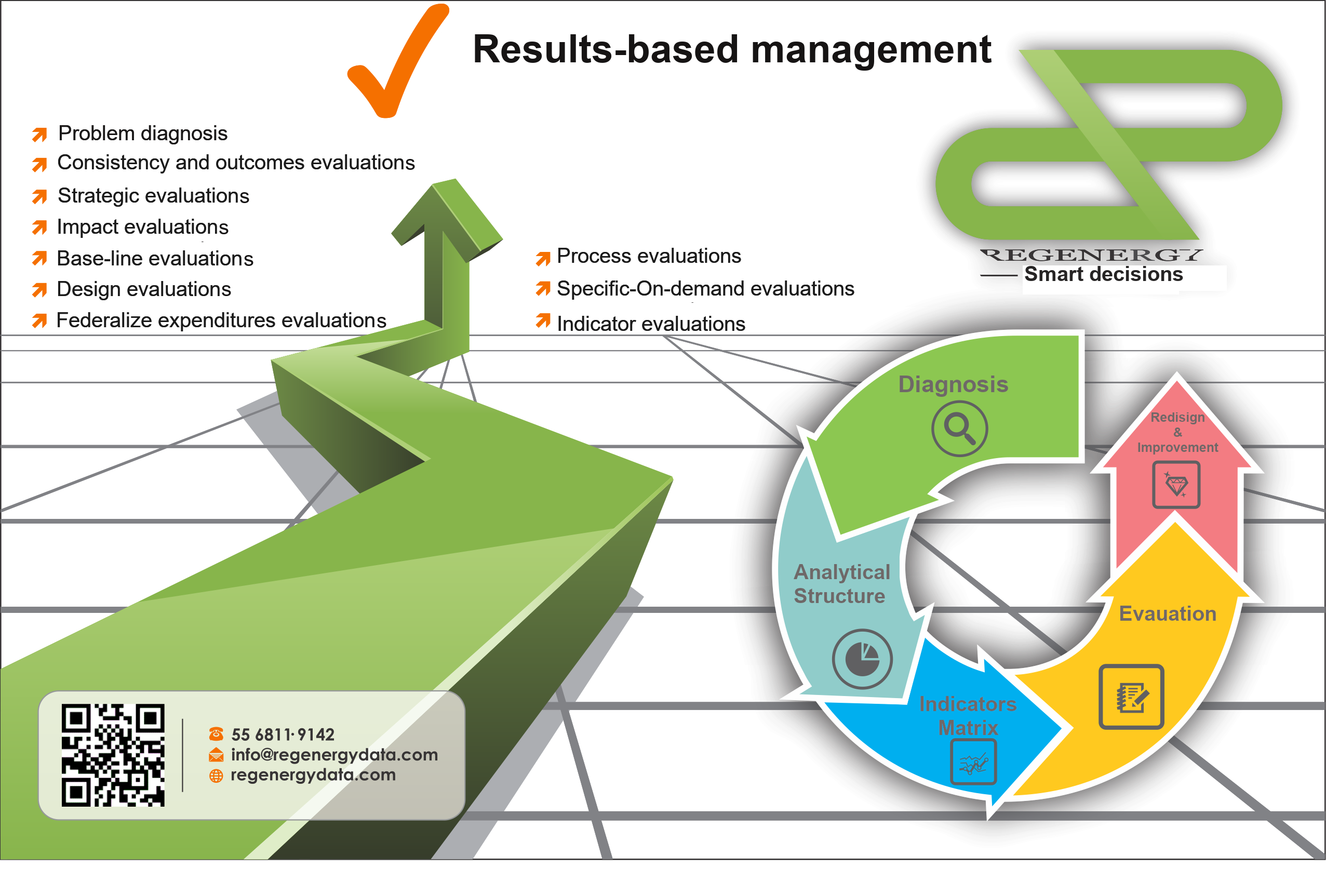
Diagnostic: Logical Framework & Theory of Change
A robust intervention begins with a precise understanding of the reality to be transformed. At Regenergy, we apply a systemic vision to diagnostics — mapping key actors, root causes, and environmental contexts — before any resources are committed. Our diagnostic services integrate internationally recognized frameworks aligned with OECD-DAC, World Bank, and IADB (BID) standards.
Identifying root causes, effects, and magnitude using empirical data.
Building Problem/Objective trees and the Results Matrix.
Defining the "Hard Core" principles and causal pathways to impact.
Segmenting target populations and selecting cost-effective interventions.
🔬 Core Diagnostic Methodologies
- Problem & Objective Trees
- Alternative Selection Analysis
- Results Matrix Design
- Performance Indicator Formulation
- "Hard Core" (Irrefutable principles)
- "Heuristic Belt" (Flexible operational rules)
- Results Chain Mapping
- Assumption & Risk Validation
- Potential vs. Objective Population
- Vulnerability Context Mapping
- Gender & Intercultural Approaches
- Intersectoral Coordination Strategies
Our diagnostic process ensures that every intervention is grounded in evidence:
- Problem Definition & Magnitude: We conduct exhaustive research using national microdata (INEGI, ENIGH, ENEMDU) and international benchmarks to quantify the problem, identify root causes, and forecast future trends.
- Logical Framework Approach (LFA): We systematically construct Problem and Objective trees, evaluate alternative solutions via cost-benefit analysis, and design the Results Matrix following international guidelines.
- Theory of Change (ToC): Beyond the "what" of the LogFrame, the ToC explains the "why" and "how". We define the Hard Core (the irrefutable scientific or empirical principles backing the intervention) and the Heuristic Belt (the flexible operational rules and procedures), ensuring the causal logic is robust and adaptable.
- Target Population & Coverage Strategy: We rigorously differentiate between the potential, objective, and attended populations, incorporating transversal approaches (gender, interculturality, rurality) to ensure no vulnerable group is left behind.
A well-designed intervention is only as strong as the diagnostic that grounds it. The next step is deciding what to evaluate, when, and how — which is where our specialized evaluation portfolio comes in.
Design, Consistency & Process Evaluations
Before measuring impact, we ensure the intervention is logically sound, well-operated, and fit for purpose. These formative evaluations are the foundation of credible impact assessment and are aligned with the OECD-DAC six criteria (relevance, coherence, effectiveness, efficiency, impact, and sustainability).
📋 Design Evaluations
We assess whether a program's strategic and management indicators correctly reflect its goals. This includes verifying that the theoretical hypotheses guiding the intervention are properly documented and grounded in the diagnostic and MIR. Design evaluations answer: is the program built to succeed?
🔗 Consistency & Results Evaluations
We analyze the logical structure of programs and projects to verify that inputs, activities, outputs, and outcomes are correctly aligned with the stated purpose. A consistent program has no broken links in its results chain, and its management instruments are effectively oriented toward achieving measurable results.
⚙️ Process Evaluations
We examine whether normative procedures match operational reality — identifying bottlenecks, delays, and implementation gaps. Process evaluations answer: are things being done the way they were planned? and does the operational design actually produce the intended change?
Design and process evaluations tell us whether a program is implemented correctly. The next question — the one that matters most to decision-makers and funders — is whether it actually transformed reality. That is the role of impact evaluation.
Impact Evaluation: Measuring What Actually Changed
Impact evaluations measure the causal effect of an intervention — the magnitude of change that can be directly attributed to the program, rather than to external factors. We follow the methodological standards of 3ie, J-PAL, and the World Bank's DIME group, combining quantitative rigor with qualitative depth.
📊 The Impact Evaluation Lifecycle
Robust impact evaluation is not a single moment — it is a longitudinal process. Our approach integrates four interlinked evaluation types across the intervention lifecycle:
Initial measurement before intervention. Establishes the counterfactual.
Process verification & early outcome signals. Enables adaptive management.
Post-implementation measurement. Same indicators as baseline, same population.
Causal attribution. Measures the delta attributable to the intervention.
🔬 Methodological Toolkit (J-PAL / 3ie / World Bank standards)
- Randomized Controlled Trials (RCTs)
- Cluster-randomized designs
- Encouragement designs
- Difference-in-Differences (DiD)
- Regression Discontinuity (RDD)
- Propensity Score Matching (PSM)
- Synthetic Control Methods
- Theory-based evaluation
- Contribution analysis
- Process tracing
- Qualitative Comparative Analysis (QCA)
👥 Social Impact Evaluation (ESIA)
For energy, infrastructure, and extractive-sector projects, we conduct Environmental and Social Impact Assessments (ESIA) aligned with ILO 169, IFC Performance Standards, and Mexican energy-sector regulations (SENER, CRE). We identify affected communities and indigenous peoples, characterize and predict social consequences, and design mitigation and social management plans.
While social impact evaluation centers on human communities, many interventions operate within broader ecological contexts. To ensure that social gains do not come at the expense of environmental degradation—or vice versa—we must evaluate the territory as a whole. This is where Landscape Assessment becomes essential.
Landscape Assessment
Human well-being and economic activities are intrinsically linked to the health of the territories they occupy. A Landscape Assessment is a holistic diagnostic that evaluates the environmental, social, and economic conditions of a specific geographical area. It moves beyond site-level monitoring to capture the cumulative impacts and systemic interactions occurring across an entire landscape.
At REGENERGY, we utilize recognized methodologies, including principles from the LandScale Assessment Framework and guidelines from the IUCN and Conservation International, to deliver comprehensive territorial insights.
What We Measure
- Ecosystem Health: Biodiversity, forest cover, water quality, and soil health.
- Human Well-being: Livelihoods, land tenure, and community resilience.
- Governance: Institutional capacity, policy enforcement, and stakeholder collaboration.
- Production: Agricultural yields, resource efficiency, and sustainable practices.
How We Do It
- Geospatial Analysis: Utilizing GIS to map land-use changes, critical habitats, and infrastructure.
- Field Data Collection: Ground-truthing ecological indicators and conducting biodiversity surveys.
- Participatory Mapping: Engaging local communities to integrate traditional ecological knowledge.
- Multi-criteria Evaluation: Synthesizing data into actionable indices and sustainability metrics.
Landscape assessments provide the necessary baseline to design Nature-based Solutions, guide regional land-use planning, and demonstrate the territorial impact of corporate sustainability commitments. They are essential for understanding the true context of any major project or policy.
Understanding the impact on people (Social Impact Evaluation) and the territory (Landscape Assessment) provides a complete picture of an intervention's footprint. The next crucial step is assessing whether the investment was economically sound for society as a whole.
Public Policy Evaluation
Public policy evaluation takes an integral approach to public action, analyzing the combined results of diverse interventions carried out by different institutions, programs, projects, and resources around a broad-reaching theme or problem (e.g., education, health, climate change, or security).
🌐 Strategic & Transversal Analysis
Unlike program-specific evaluations, public policy evaluations assess the coherence, coordination, and overall effectiveness of a suite of programs working towards a common strategic goal. We evaluate both specific policies and transversal policies (such as gender perspective or social development) that cut across the entire public administration.
🎯 Key Objectives
- Internal Coherence: Verifying that the design of the policy and its underlying programs are logically sound and aligned with national planning instruments.
- External Coherence: Analyzing complementarity and coordination with other policies, both intra- and inter-governmental.
- Transversality & Sustainability: Ensuring the policy incorporates cross-cutting approaches (e.g., human rights, gender equality) and is designed for long-term viability.
- Evaluability & Transparency: Assessing the quality of information systems, accountability mechanisms, and the availability of open data.
By evaluating policies holistically, we help governments identify systemic gaps, optimize resource allocation across multiple programs, and ensure that broad strategic objectives are actually being met.
Socioeconomic Evaluation of Projects
Socioeconomic evaluations identify, quantify, and value the costs and benefits attributable to a project that affect society as a whole — going beyond financial profitability to assess social profitability. This is the cornerstone of high-quality public investment and aligns with the methodological guidelines of the World Bank, IADB (BID), and Mexico's SHCP.
🧮 What we measure
- Economic Net Present Value (ENPV): Discounted social benefits minus social costs, using shadow prices and the social discount rate.
- Economic Internal Rate of Return (EIRR): The discount rate at which ENPV equals zero — a direct measure of social profitability.
- Benefit-Cost Ratio (BCR): The ratio of discounted benefits to discounted costs.
- Externalities monetization: Environmental, health, congestion, and distributional effects — applying the Environmental Life Cycle Costing (ELCC) framework from our LCA practice.
- Distributional analysis: Who wins and who loses? We break down impacts by income decile, gender, region, and indigenous status.
🎯 Applications
- Public investment prioritization (national and subnational)
- Regulatory impact analysis (RIA)
- Energy, transport, and water infrastructure appraisal
- Climate adaptation and decarbonization project valuation
- Federalized expenditure evaluation (Gasto Federalizado)
Our evaluations support evidence-based resource allocation — ensuring public funds generate maximum social return and that projects comply with fiscal responsibility frameworks.
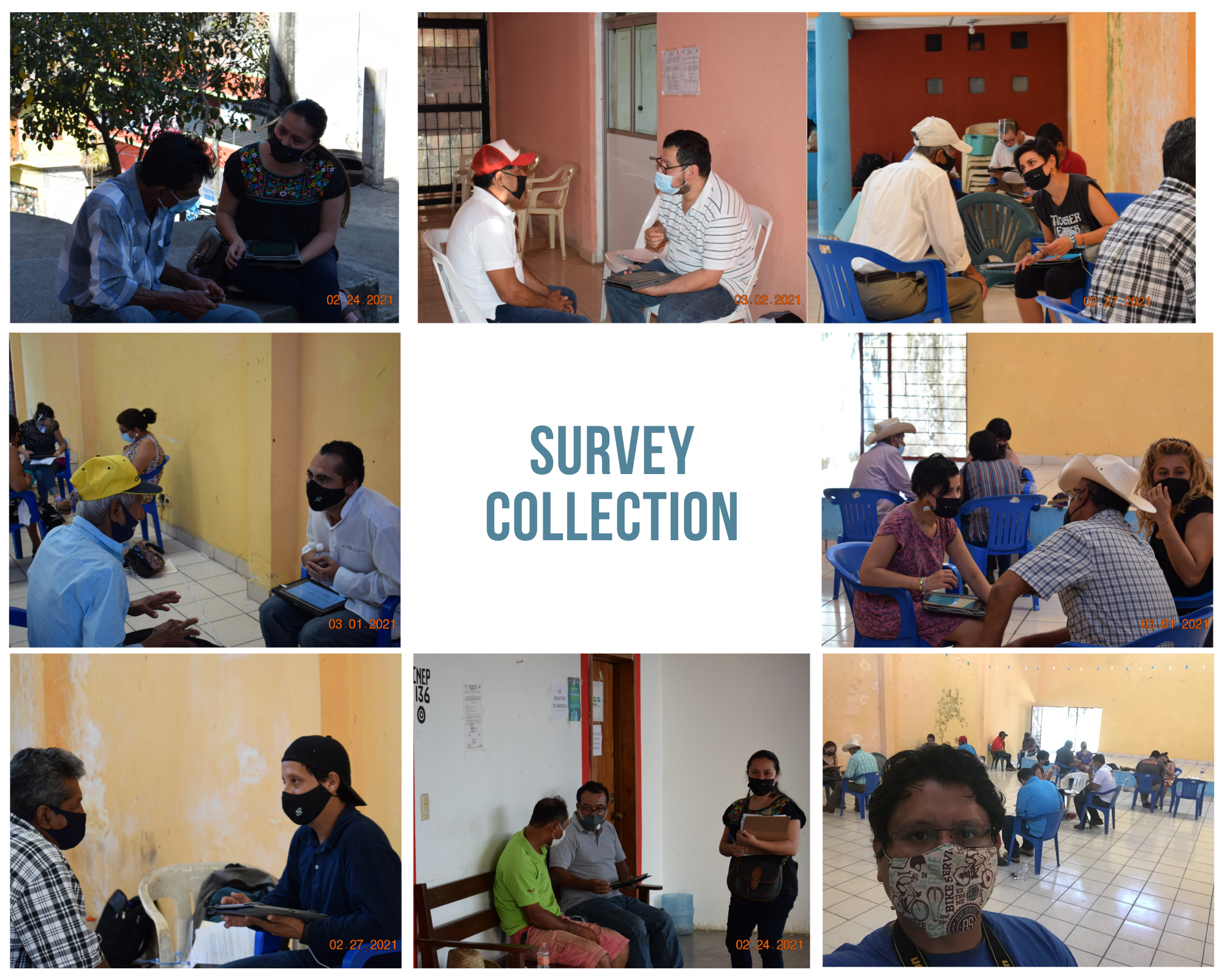
All evaluation methodologies depend on one critical input: high-quality data. Our survey and data-analysis services provide the empirical foundation every rigorous evaluation requires.
Surveys, Focus Groups & Advanced Data Analysis
We combine quantitative and qualitative data-collection methods to produce a comprehensive understanding of the reality we aim to transform. Our approach follows international best practices from ESOMAR, AAPOR, and the World Bank's LSMS program.
📝 Data Collection Instruments
- Structured, semi-structured, and unstructured surveys: Designed with best practices in question formulation, cognitive testing, sampling design (probabilistic and non-probabilistic), and field protocols.
- Focus groups and participatory workshops: Facilitated sessions with 6–10 participants that capture rich ideas, knowledge, and proposals directly from stakeholders.
- In-depth interviews: Detailed qualitative investigations into personal perspectives, expert insights, and lived experiences.
📈 Advanced Data Analysis
- Quantitative: Descriptive and inferential statistics, panel data analysis, discrete choice models, and impact-evaluation econometrics (DiD, RDD, PSM).
- Qualitative: Narrative theme coding, grounded theory, and discourse analysis.
- Microdata exploitation: We leverage microdata from national surveys (ENIGH, ENEMDU, ENOE, ENVIPE) and custom field databases to accurately identify and characterize potential and objective populations.
- Spatial and geostatistical analysis: GIS-based targeting and impact mapping using QGIS and R.
These services complete our strategic offering: design, evaluate, and listen — ensuring every decision is grounded in real evidence rather than assumption.
How organizations benefit from our services
Evidence‑based decision‑making
Our evaluations and diagnostics provide the evidence you need to make informed decisions about programs, projects, and policies — reducing risk, improving outcomes, and defending your choices to stakeholders, regulators, and funders.
Continuous improvement through ToC & LogFrame
Our Theory of Change and Logical Framework approaches help you understand what works, why, and under what conditions — enabling adaptive management, sharper strategy, and continuous learning across the entire intervention lifecycle.
Stakeholder insight through primary evidence
Our survey design, focus groups, and in‑depth interviews capture rich stakeholder perspectives — grounding your strategy in real evidence rather than assumptions, and ensuring that decisions reflect the people they affect.
Measurable social return on investment
Our socioeconomic evaluations translate impacts into monetary terms — giving decision-makers a clear, comparable metric of social profitability aligned with IADB, World Bank, and national fiscal frameworks.
Regulatory and international compliance
We align your evaluations with OECD-DAC, 3ie, J-PAL, ILO 169, and IFC Performance Standards — essential for multilateral financing, climate funds, and international partnerships.
Regenerative development & territorial lens
We go beyond conventional evaluation by integrating regenerative development principles and Landscape Assessments. We assess not just whether an intervention worked, but whether it left social systems and ecosystems more resilient, equitable, and capable of renewal, capturing the full territorial impact.
 REGENERGY