
SERVICES
Unlock lasting growth with science‑based sustainability
- Environmental Life Cycle Assessment / ISO 14040 | 14044
- Evaluation of programs, projects and policies
- Diagnostic based on Logical Framework and Theory of Change
- Survey design | Focus Groups | Interviews | Data analysis
- Social Life Cycle Assessment / ISO 14075:2024
- Life Cycle Costing – Economic Life Cycle Assessment
- Carbon Accounting | Greenhouse Gases Inventory
- Environmental Product Declaration (EPD) / ISO 14025
- Techno‑Economic Analysis | Cost‑benefit Analysis
- Circular Economy
- Global Value Chain Analysis | Supply Chain Assessment
- European Union's Digital Product Passport
- Sustainability Reporting (ESG | SBTi | GRI | SDGs)
- Impact Measurement and Management (IMM) | Materiality Assessment
- China in the World
- Energy modeling / Energy Analysis / Energy Efficiency
- Economic Analysis
- Sustainability: Courses for Every Level of Management
- Artificial Intelligence in LCA & Sustainability
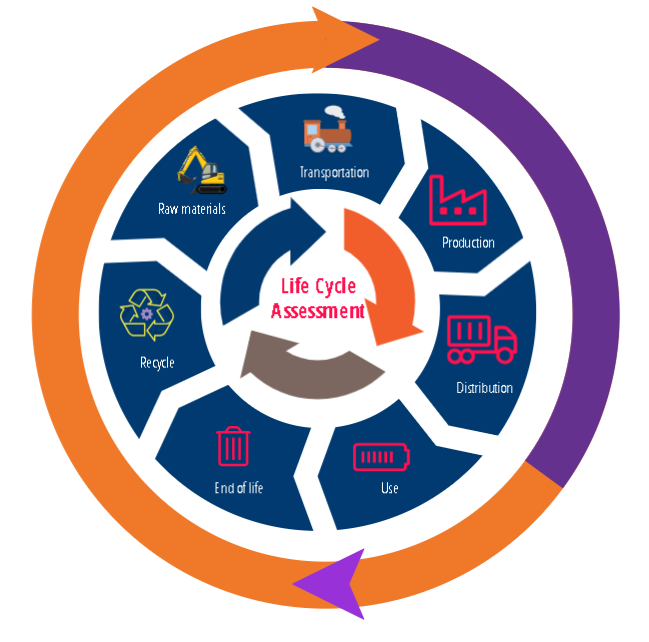
Environmental Life Cycle Assessment / ISO 14040 | 14044
We help you quantify the environmental impacts of your products, services, systems, or your entire organization across their full life cycle – from raw material extraction to end‑of‑life. Our LCAs follow the approach and methodologies outlined in ISO 14040 and 14044.
We identify opportunities for improving environmental performance, enabling comparisons between processes or products made from different materials to improve product design and development. From an LCA, we generate actionable applications such as Hotspot Analysis to pinpoint key impact drivers, Eco‑design to guide sustainable product development, Environmental Product Declarations (EPD) and Product Carbon Footprints (PCF) for transparent market communication, Circular Economy assessments to validate circular strategies, and robust data for Sustainability Reporting and strategic decision‑making.
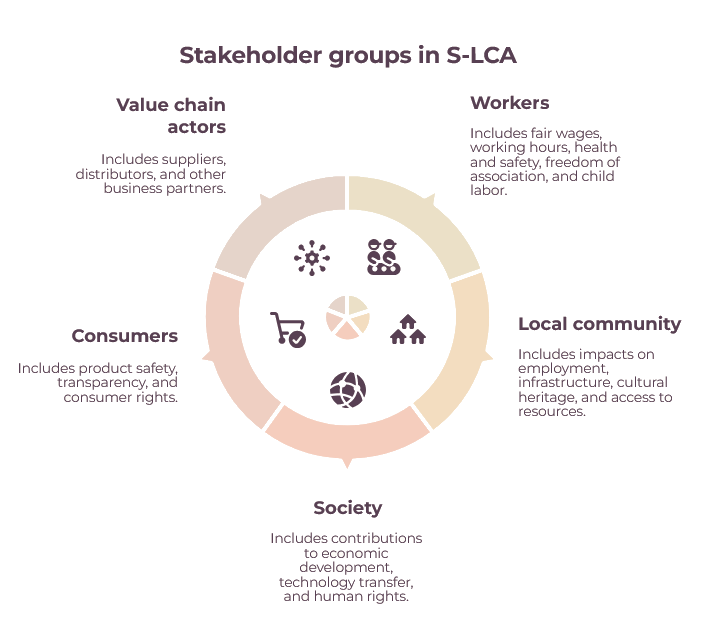
Social Life Cycle Assessment / ISO 14075:2024
We assess the positive and negative social impacts of products and services along their entire life cycle, complementing environmental LCA and Life Cycle Costing. Our approach follows the new ISO 14075:2024 framework, evaluating social and socio‑economic aspects from raw material extraction through manufacturing, distribution, use, and final disposal.
We examine five main stakeholder groups – workers, local community, society, consumers, and value chain actors – helping you identify social hotspots, improve labor conditions, and demonstrate your commitment to social sustainability across the value chain.
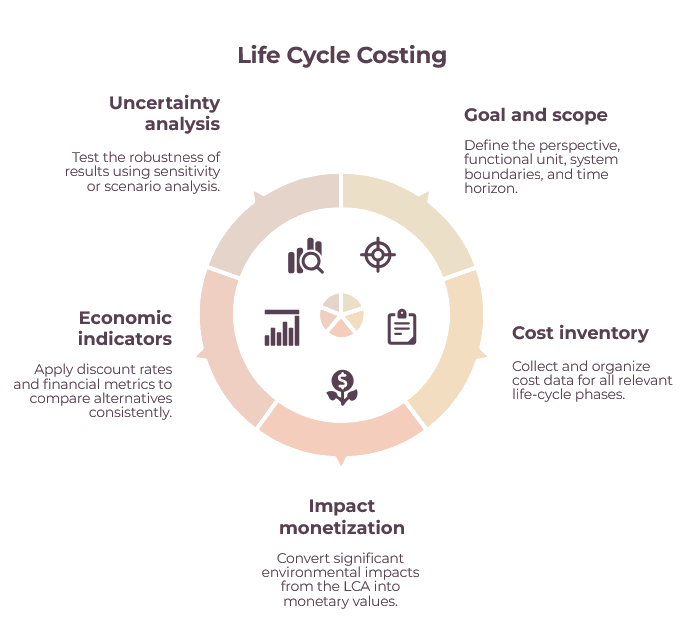
Life Cycle Costing – Economic Life Cycle Assessment
We calculate the total cost of your products, services, or assets over their entire life cycle – from acquisition through operation and maintenance to disposal. Our Environmental Life Cycle Costing (ELCC) goes further by monetizing environmental externalities identified in your LCA and adding them to internal costs.
We follow the SETAC code of practice and align with ISO 14040 and 14044 frameworks, helping you identify cost drivers, reduce total ownership costs, and make more sustainable procurement and investment decisions.
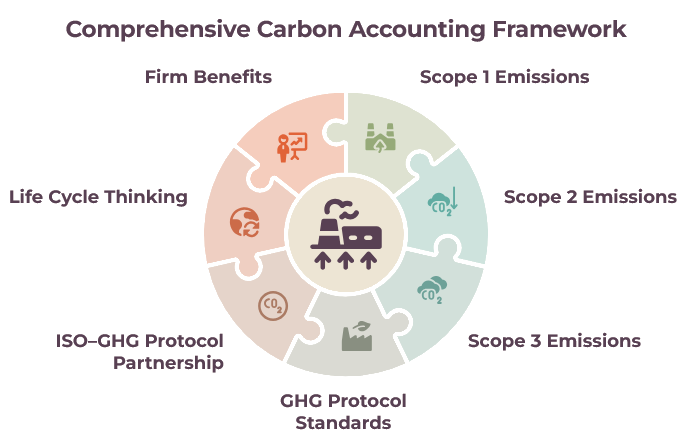
Carbon Accounting | Greenhouse Gases Inventory
We help you measure, report, and manage your greenhouse gas emissions using the internationally recognized GHG Protocol framework. Our carbon accounting services cover all three scopes – direct emissions (Scope 1), emissions from purchased energy (Scope 2), and value chain emissions (Scope 3).
We guide you through the 15 categories of Scope 3 emissions, from purchased goods and services to end‑of‑life treatment of sold products. With the ISO–GHG Protocol partnership converging carbon accounting standards, we help you stay ahead of evolving regulatory requirements such as CSRD, ISSB, and emerging carbon border mechanisms.
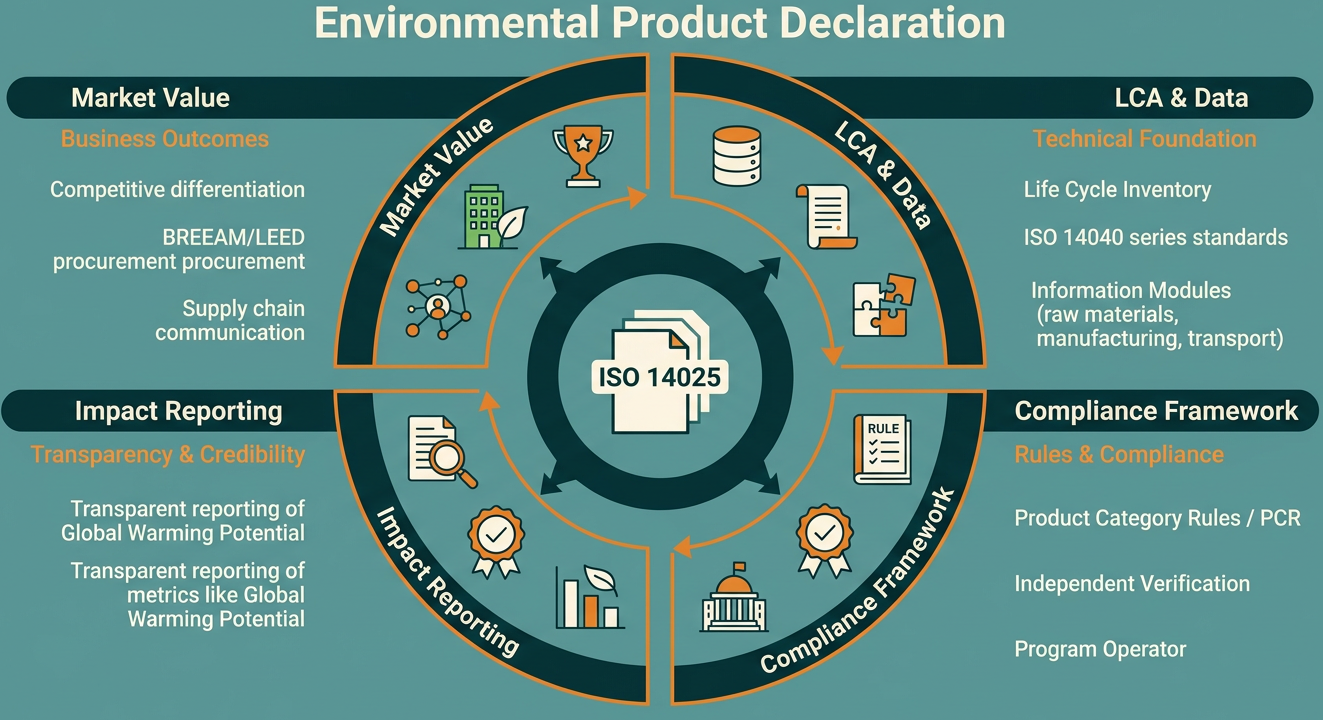
Environmental Product Declaration (EPD) / ISO 14025
We help you develop Type III environmental declarations based on ISO 14025, translating your LCA results into transparent, verified documents that communicate your product's environmental performance to customers, investors, and regulators.
Our EPD services include compliance with Product Category Rules (PCR), independent verification, and program operator alignment. We transform LCA data into a practical, market‑ready communication tool that helps you gain competitive advantage, access green markets, and meet procurement requirements such as BREEAM and LEED.
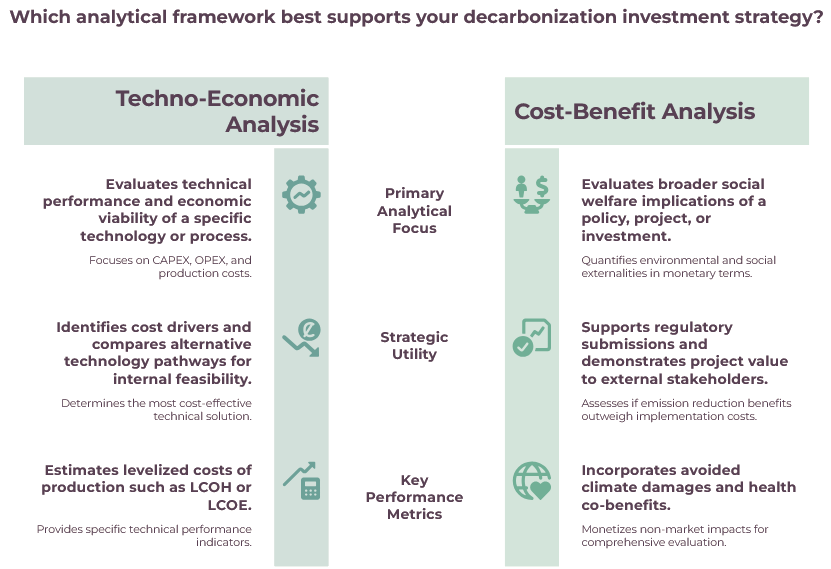
Techno‑Economic Analysis | Cost‑benefit Analysis
We evaluate the technical performance and economic viability of your decarbonization strategies. Our Techno‑Economic Analysis (TEA) combines engineering process modeling with economic assessment to estimate CAPEX, OPEX, and levelized costs of production.
Our Cost‑Benefit Analysis (CBA) quantifies environmental and social externalities in monetary terms, helping you assess whether the benefits of reducing greenhouse gas emissions outweigh the costs of implementing low‑carbon technologies. We model different scenarios – varying energy prices, carbon prices, and technology costs – to help you make sound investment decisions under uncertainty.
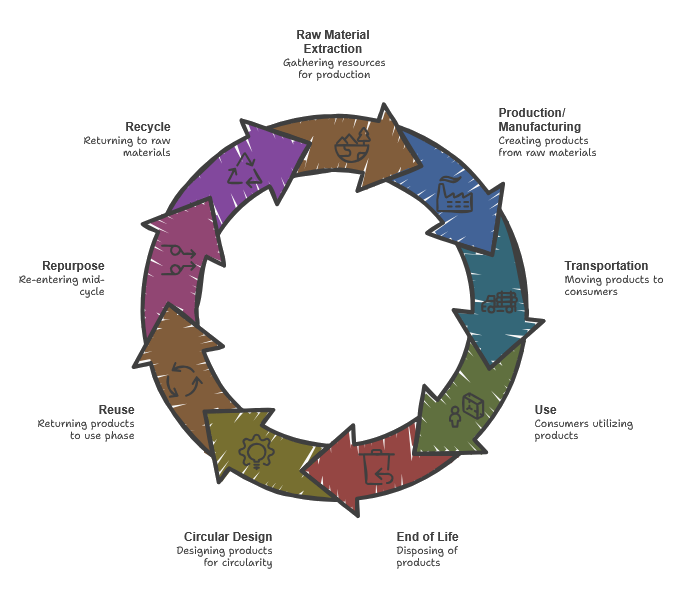
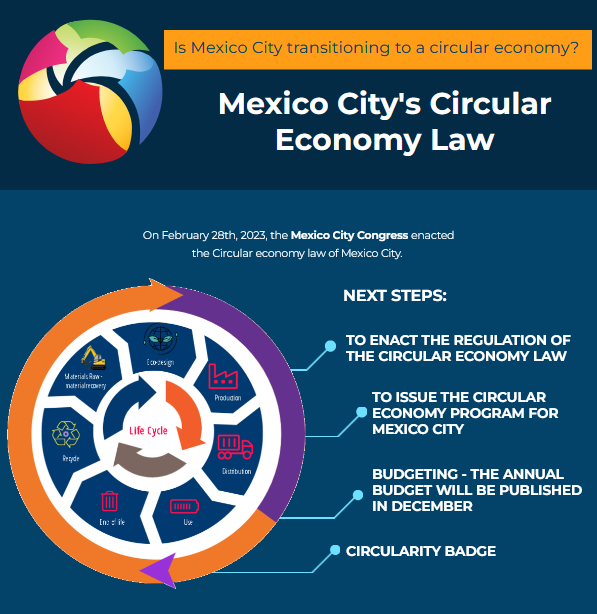
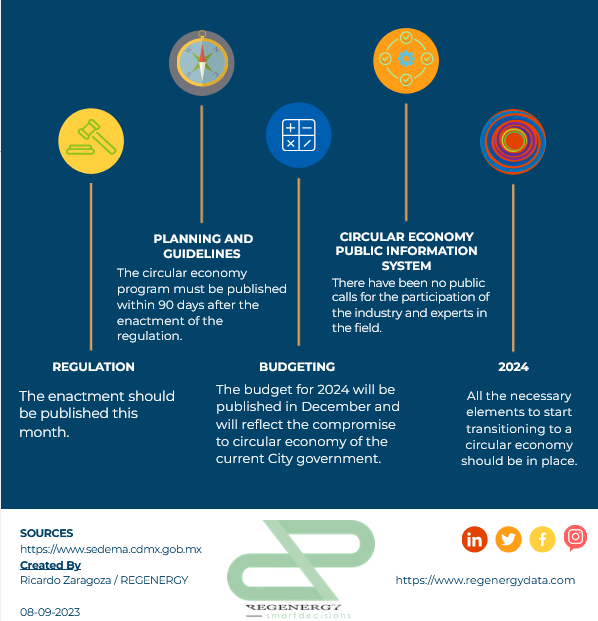
Circular Economy
We help you design and validate circular business models that decouple economic growth from resource consumption. Our circularity analyses are based on a deep understanding of value chains, life cycle analysis, and impact measurement, using robust internationally developed frameworks for measuring circularity.
We quantify the trade‑offs inherent to each circular loop – reuse, repair, remanufacturing, repurposing, and recycling – comparing circular scenarios against linear baselines to determine whether strategies genuinely lower environmental impacts or merely shift them across categories or life cycle stages.
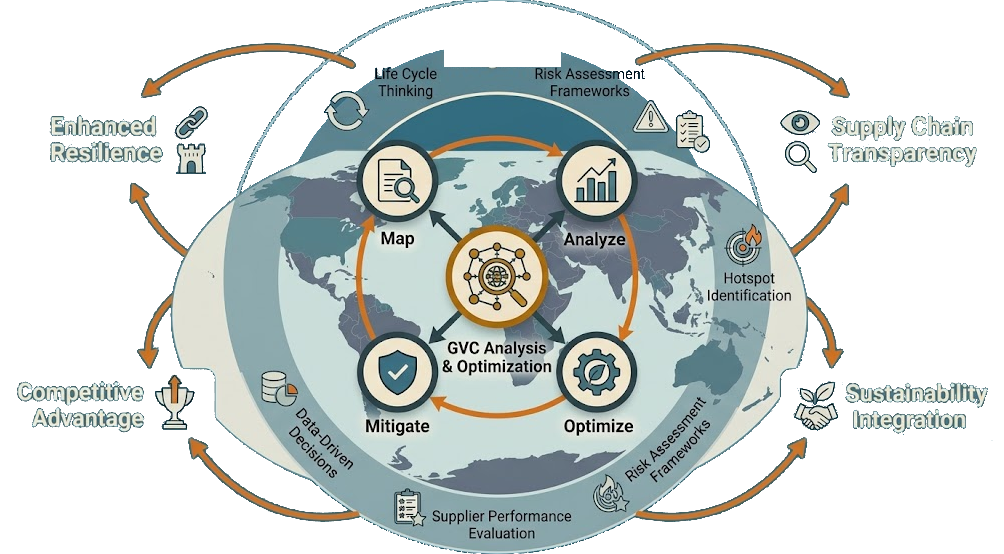
Global Value Chain Analysis | Supply Chain Assessment
We help you map, analyze, and optimize your value chain to enhance resilience and sustainability. Our approach combines life cycle thinking with risk assessment frameworks to identify hotspots, evaluate supplier performance, and develop mitigation strategies.
We support the integration of environmental and social criteria into procurement decisions, enabling you to build a more sustainable and competitive supply chain – from raw material sourcing to end‑of‑life management.
European Union's Digital Product Passport
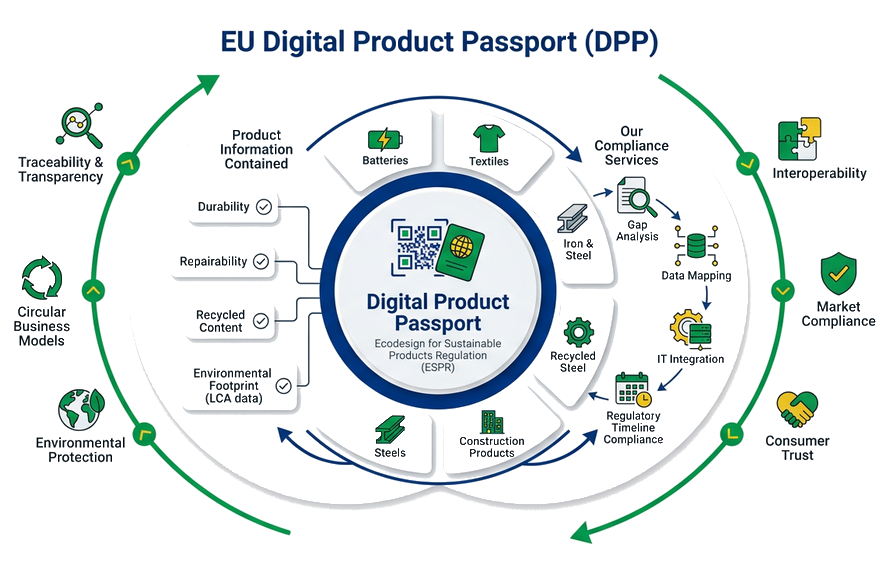
We help you prepare for the EU Digital Product Passport (DPP), a key initiative under the Ecodesign for Sustainable Products Regulation (ESPR). Products sold in the EU will soon require a digital record containing information on durability, repairability, recycled content, and environmental footprint.
Our services include gap analysis, data mapping, integration with your existing IT systems, and ensuring compliance with the regulatory timeline. We also leverage the DPP as an opportunity to enhance supply chain transparency and build consumer trust.
Sustainability Reporting (ESG | SBTi | GRI | SDGs)
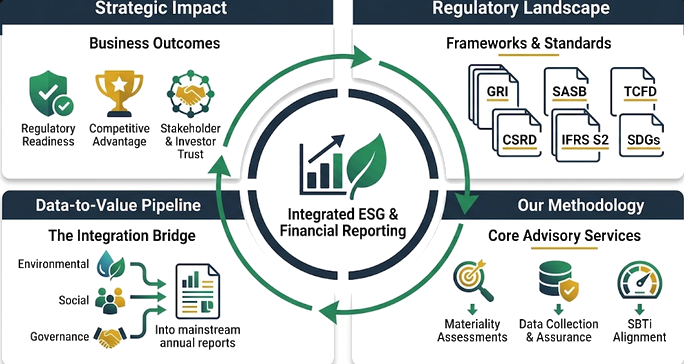
We help you navigate the complex landscape of sustainability reporting frameworks – from GRI and SASB to TCFD, CSRD, and IFRS S2. Our services include materiality assessments, data collection and assurance, and alignment with Science Based Targets (SBTi).
We integrate environmental, social, and governance (ESG) metrics into mainstream financial reporting, ensuring your reporting is not only compliant but also drives strategic value and stakeholder trust.
Impact Measurement and Management (IMM) | Materiality Assessment
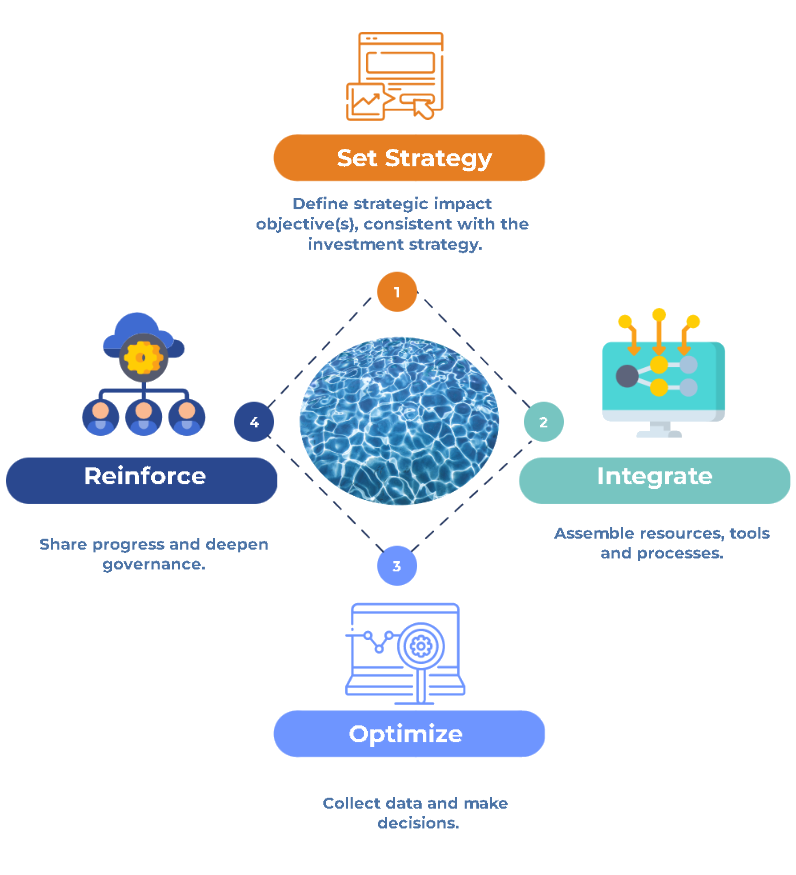
We help you understand the impact your organization is having on its key stakeholders and how these impacts align with your financial and sustainability goals. Through robust practices and frameworks such as SDGs, SBTi, GRI, ESG, SASB, and TCFD, we help you make informed decisions about how to improve the well‑being of people and the planet you impact.
Our IMM services include materiality assessment, theory of change development, impact metrics selection, data collection and analysis, and impact valuation.
China in the World
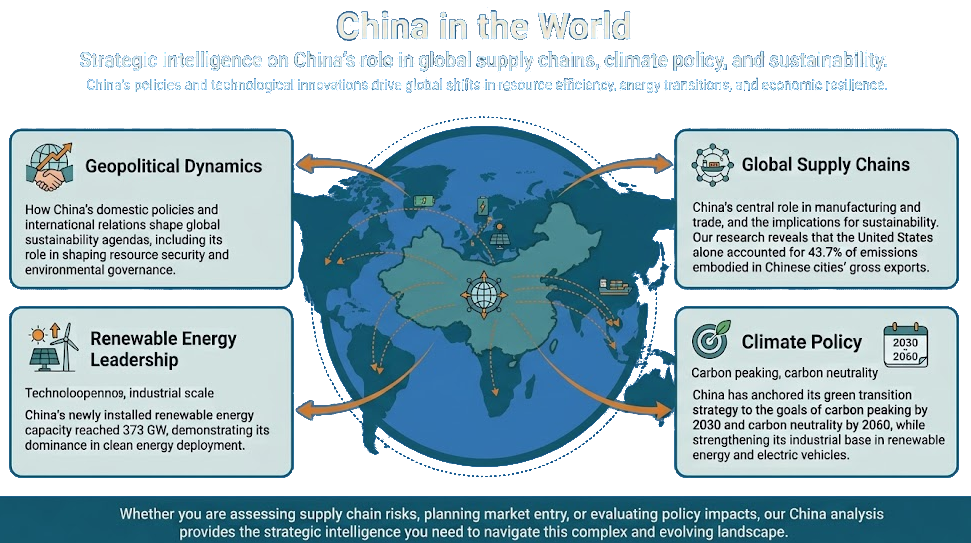
We provide strategic intelligence on China's role in global supply chains, climate policy, and sustainability. China's policies and technological innovations drive global shifts in resource efficiency, energy transitions, and economic resilience.
Our analysis covers China's carbon peaking by 2030 and carbon neutrality by 2060 goals, its dominance in renewable energy and electric vehicle supply chains, and the implications for global supply chain restructuring. We help you assess supply chain risks, and evaluate policy impacts.
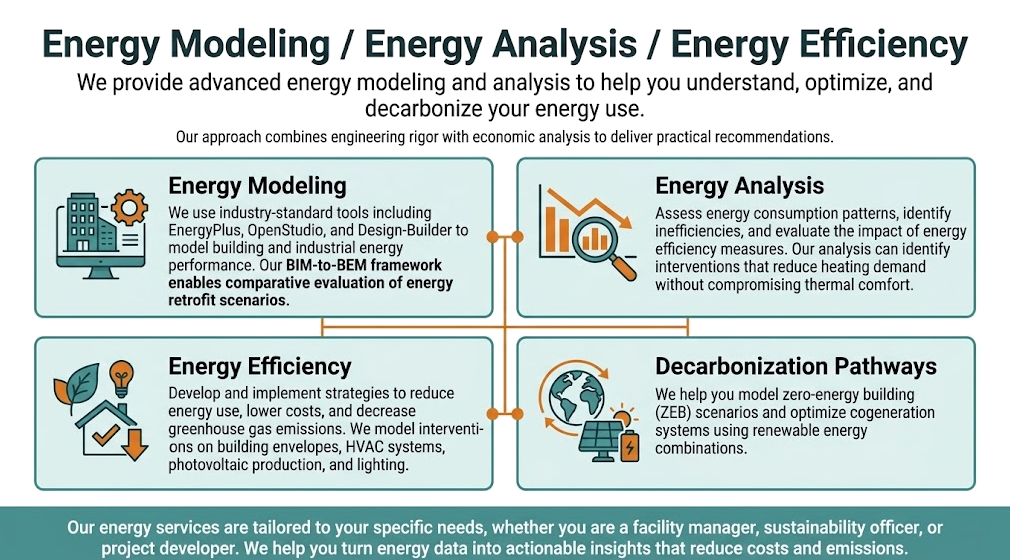
Energy modeling / Energy Analysis / Energy Efficiency
We provide advanced energy modeling and analysis to help you understand, optimize, and decarbonize your energy use. We use industry‑standard tools to model building and industrial energy performance.
Our services include energy consumption analysis, identification of inefficiencies, and development of energy efficiency strategies. We model interventions on building envelopes, HVAC systems, photovoltaic production, and lighting – helping you reduce costs, lower emissions, and achieve zero‑energy building (ZEB) scenarios.
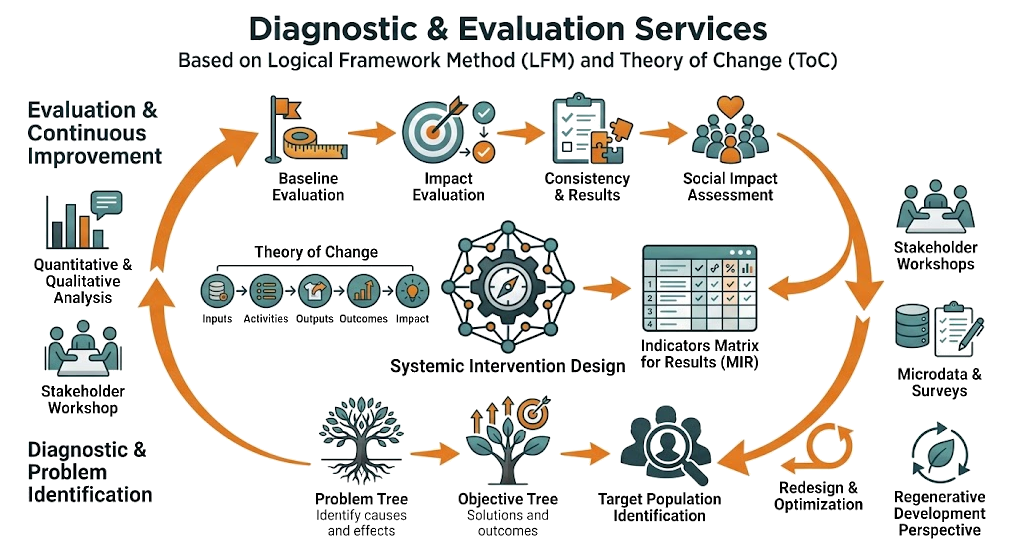
Evaluation of programs, projects and policies | Diagnostic based on Logical Framework and Theory of Change
We provide rigorous, science‑based evaluation and diagnostic planning for programs, projects, and policies. Our diagnostic services are grounded in the Logical Framework Method (LFM) and Theory of Change (ToC), enabling us to design effective interventions and generate problem and objective trees.
Our evaluation approach combines quantitative and qualitative methods to assess effectiveness, efficiency, relevance, impact, and sustainability – the six evaluation criteria established by the OECD. We specialize in theory‑based evaluation, mixed‑method designs, and the development of Indicators Matrix for Results (MIR).
Our services help you understand what works, why, and under what conditions – enabling evidence‑based decision‑making and accountability.
Learn more about our Evaluation services →
Learn more about our Diagnostic services →
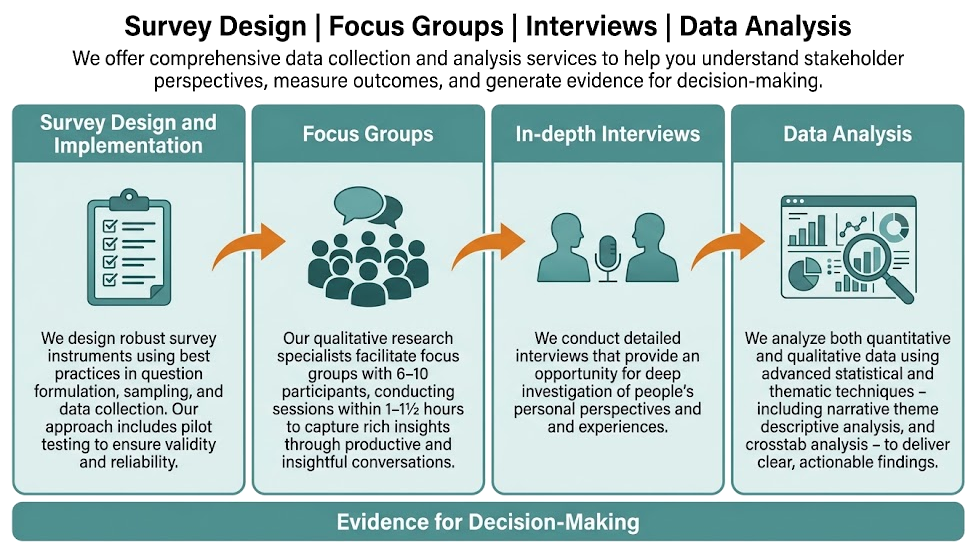
Survey design | Focus Groups | Interviews | Data analysis
We offer comprehensive data collection and analysis services to help you understand stakeholder perspectives, measure outcomes, and generate evidence for decision‑making.
We design robust survey instruments using best practices in question formulation, sampling, and data collection. Our qualitative research specialists facilitate focus groups (6‑10 participants) and conduct in‑depth interviews to capture rich insights. We analyze both quantitative and qualitative data using advanced statistical and thematic techniques – including narrative theme coding, descriptive analysis, and crosstab analysis – to deliver clear, actionable findings.
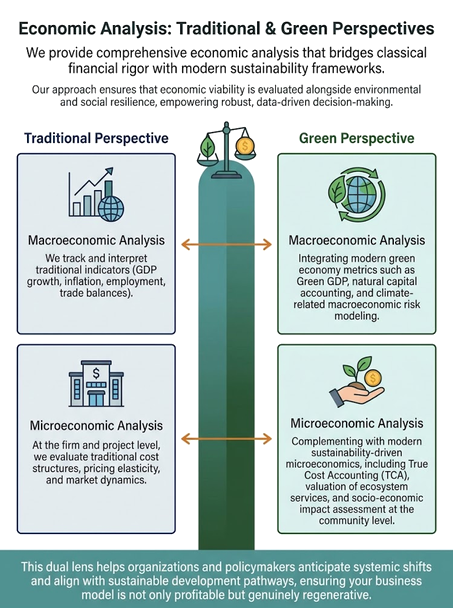
Economic Analysis: Traditional & Green Perspectives
We provide comprehensive economic analysis that bridges classical financial rigor with modern sustainability frameworks. Our approach ensures that economic viability is evaluated alongside environmental and social resilience, empowering robust, data‑driven decision‑making.
Macroeconomic Analysis: We track and interpret traditional indicators (GDP growth, inflation, employment, trade balances) while integrating modern green economy metrics such as Green GDP, natural capital accounting, and climate‑related macroeconomic risk modeling. This dual lens helps organizations and policymakers anticipate systemic shifts and align with sustainable development pathways.
Microeconomic Analysis: At the firm and project level, we evaluate traditional cost structures, pricing elasticity, and market dynamics. We complement this with modern sustainability‑driven microeconomics, including True Cost Accounting (TCA), valuation of ecosystem services, and socio‑economic impact assessment at the community level. This ensures your business model is not only profitable but genuinely regenerative.
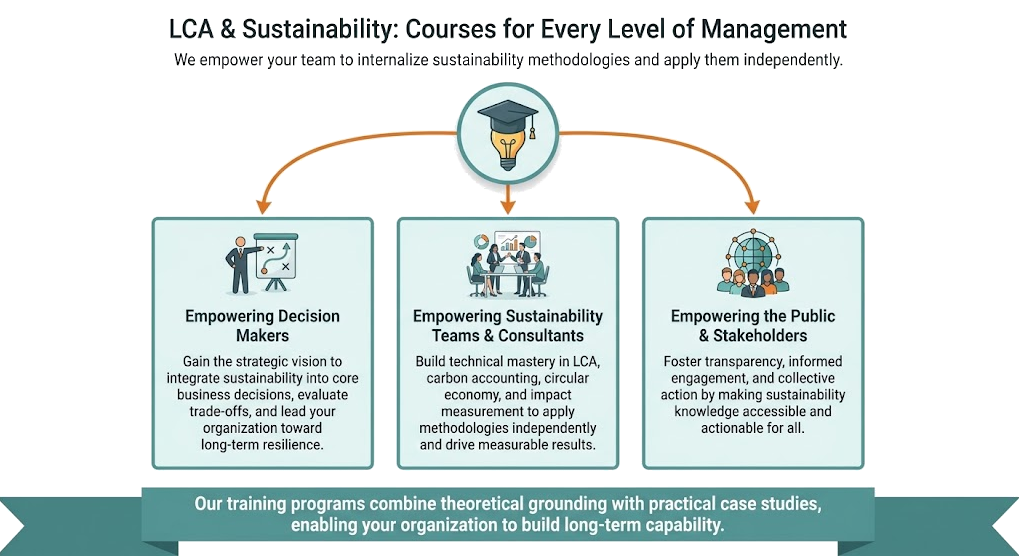
LCA & Sustainability: Courses for Every Level of Management
We empower your team to internalize sustainability methodologies and apply them independently. Our courses cover LCA fundamentals, carbon accounting, circular economy, sustainability reporting, and impact measurement – tailored for every level of management.
Our training programs combine theoretical grounding with practical case studies, enabling your organization to build long‑term capability rather than ongoing consultancy dependency.
PERSPECTIVES